Insulation Contractor Insurance: The Complete Guide for 2025
By Contractors Choice Agency
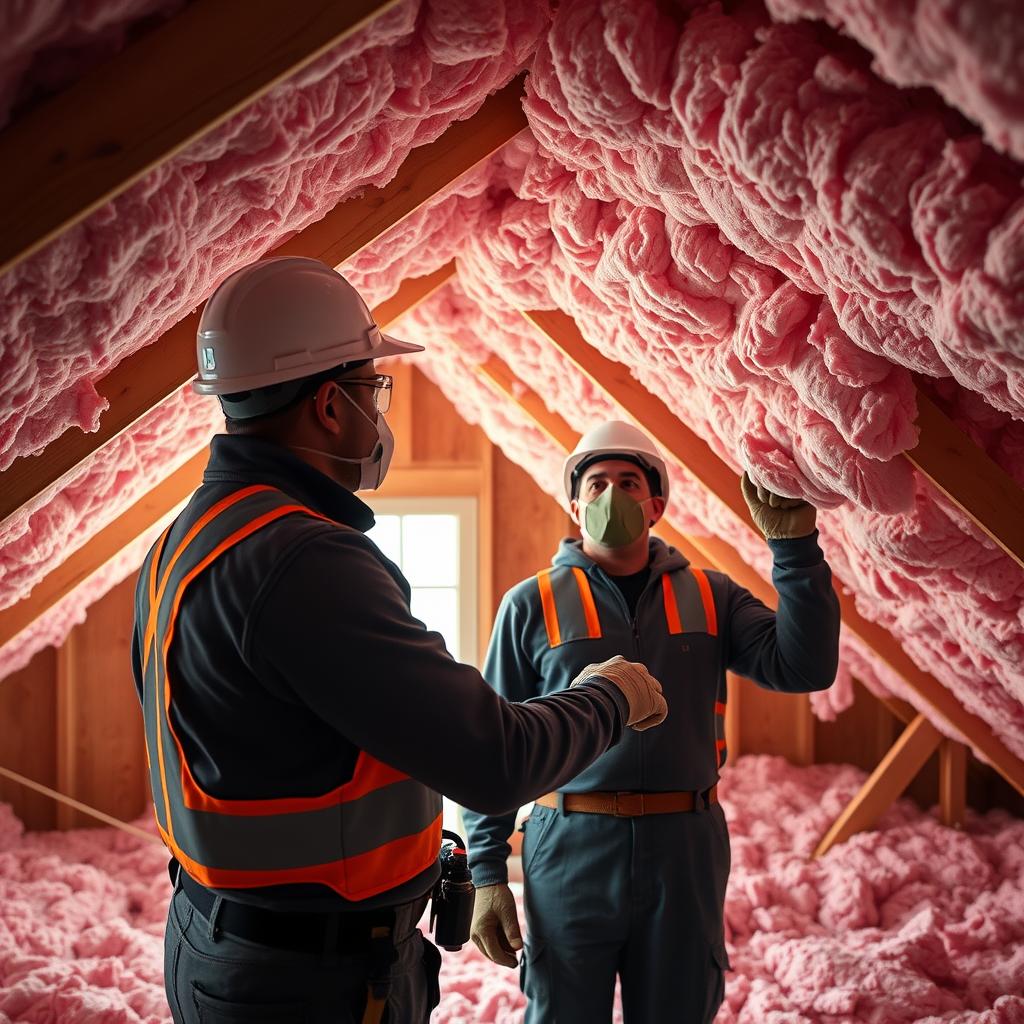
Insulation contracting is one of the most specialized — and most under-insured — trades in the construction industry. Standard contractor insurance programs are built around general contractors, not the specific risk profile of blown-in, batt, or spray polyurethane foam (SPF) installation.
This guide covers every line of insurance an insulation contractor should consider, what each one actually covers, and where the gaps are in standard programs.
Why insulation contractor insurance is different
Most commercial general liability (GL) policies are built on an ISO CGL form. That form has a pollution exclusion — and for insulation contractors who use spray foam, that exclusion is the most important clause in your policy.
Spray polyurethane foam chemicals, including isocyanates and polyol components, can be classified as "pollutants" under the standard policy definition. This means a standard GL policy may deny coverage for:
- Third-party bodily injury claims from foam off-gassing or chemical exposure
- Property damage claims from adhesion failures linked to chemical reactions
- Remediation costs after a foam installation triggers air quality complaints
If you're an insulation contractor carrying only a standard GL policy, you may be uninsured for your biggest real-world exposures.
The seven lines insulation contractors typically need
1. General Liability (GL)
GL is the foundation. It covers third-party bodily injury and property damage claims from your operations and completed work — someone trips at a job site, a wall gets damaged during installation, a ladder falls on a homeowner's car.
Most GCs and property owners require GL before they'll let you start work. Minimum limits are typically $1M per occurrence / $2M aggregate for residential; $2M/$4M or higher for commercial.
What GL doesn't cover: Chemical exposure and off-gassing claims (pollution exclusion), your own equipment, your employees' injuries.
2. Spray Foam Liability
This is the coverage gap-filler for SPF installers. Spray foam liability is designed specifically for the chemical exposure risk that standard GL excludes through the pollution exclusion. It covers:
- Bodily injury from isocyanate exposure or foam off-gassing
- Property damage from improper foam adhesion
- Completed operations claims from foam that caused problems after the job was finished
If you install spray polyurethane foam — open-cell or closed-cell — this coverage deserves serious attention.
3. Contractor Pollution Liability (CPL)
CPL is similar to spray foam liability and is often the vehicle insurers use to write the pollution exposure for insulation contractors. CPL covers bodily injury and property damage from pollutants released during your operations and covers the same gap in standard GL.
The key difference from standard GL: CPL explicitly includes pollution events, covering the chemical exposures that the GL pollution exclusion was designed to exclude.
4. Workers' Compensation
If you have employees, WC is legally required in almost every state. For insulation contractors, the issues are:
- Class codes matter. Insulation work has specific WC class codes based on the type of insulation work (blown-in, batt, spray foam). Wrong class codes at policy inception create audit surprises and potential coverage disputes.
- Chemical exposure is a legitimate WC exposure. Spray foam isocyanates are respiratory sensitizers. Workers who develop occupational disease from chemical exposure have valid WC claims.
- Attic and crawlspace work carries fall hazards. A large share of residential insulation work happens in spaces with physical hazard exposure.
5. Tools & Equipment
Spray rigs, proportioners, heated hose systems, and blowing machines are expensive. A professional SPF rig can cost $30,000–$80,000. Tools and equipment (T&E) coverage protects this equipment against:
- Theft from job sites or your yard
- Physical damage and vandalism
- Equipment lost or damaged at a customer's property
Note: T&E does not cover equipment in transit — that requires inland marine coverage.
6. Commercial Auto
Your trucks, vans, and spray rig trailers are commercial vehicles. Personal auto policies exclude vehicles used for commercial purposes. Commercial auto provides:
- Liability if your vehicle causes an accident
- Physical damage coverage for the vehicle
- Coverage for trailers used to haul spray rigs
7. Umbrella / Excess Liability
For commercial projects or any situation where your GL limits might not be sufficient, umbrella coverage adds limits above your GL and auto policies. Commercial insulation projects often require $2M, $5M, or more in total liability limits.
Getting the right program
The key to insulation contractor insurance is finding an agency that understands the risk — not just one that can issue a certificate. The pollution exclusion, the right WC class codes, and the spray foam liability gap are all technical issues where the wrong decision costs money when a claim hits.
Contractors Choice Agency has been placing specialty contractor insurance since 2005. We understand the exposure profile of insulation and spray foam contracting, and we work with the admitted and E&S markets that actually write this class of business.
Call 844-967-5247 or use our quote form for a 15-minute quote.
Need this coverage for your insulation business?
Get a real quote in about 15 minutes — we shop specialist insulation contractor markets.