Spray Foam Off-Gassing Claims: What Insulation Contractors Need to Know About Insurance
By Contractors Choice Agency
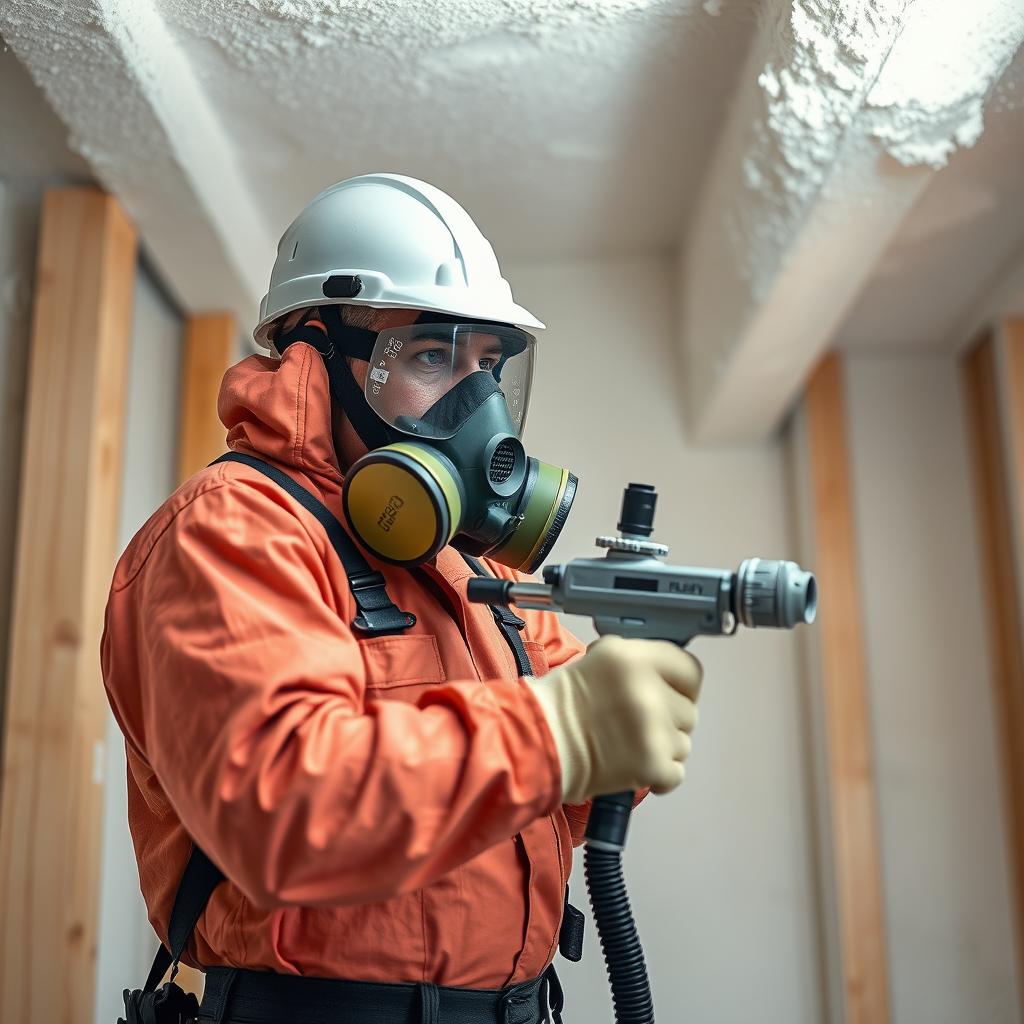
Off-gassing complaints are among the most common — and most complicated — liability exposures for spray polyurethane foam (SPF) contractors. A homeowner calls a week after your crew installed spray foam complaining of headaches, eye irritation, or a persistent chemical odor. They want to know what you're going to do about it.
The first thing most contractors do is call their insurance agent. And too often, they learn that their standard GL policy won't cover the claim.
Here's why — and what to do about it.
What is spray foam off-gassing?
When spray polyurethane foam is applied, it undergoes a chemical reaction as the A-side (isocyanate) and B-side (polyol resin) components mix and cure. This reaction produces foam and releases volatile organic compounds (VOCs) into the air.
In a properly installed, well-cured SPF application, off-gassing typically dissipates within a few days with adequate ventilation. Problems arise when:
- Foam is under-cured: Improper mixing ratios, substrate temperature out of range, or inadequate cure time can leave unreacted isocyanates in the foam that continue off-gassing
- Ventilation is inadequate: Occupied spaces that aren't ventilated during and after application trap off-gassing chemicals
- Chemical sensitivity: Some individuals react to SPF chemicals at very low concentrations that would not affect most people
- Wrong product selection: Using closed-cell foam in a space where off-gassing cannot dissipate, or selecting a product with an inappropriate blowing agent for the application
Why standard GL often doesn't cover off-gassing claims
The standard commercial general liability policy (ISO CGL form) contains a pollution exclusion. It excludes coverage for bodily injury or property damage "arising out of the actual, alleged or threatened discharge, dispersal, seepage, migration, release or escape of pollutants."
Pollutants are defined broadly: "any solid, liquid, gaseous or thermal irritant or contaminant, including smoke, vapor, soot, fumes, acids, alkalis, chemicals and waste."
Courts in many states have found that spray foam chemicals — particularly isocyanates and their reaction products — fall within this definition of pollutants. The practical result: when an off-gassing claim is tendered to a standard GL carrier, the carrier may cite the pollution exclusion to deny coverage.
This is not a hypothetical risk. Insulation contractors regularly receive claim denials based on the pollution exclusion for what looks like a routine bodily injury claim.
What coverage actually responds to off-gassing claims
Contractor Pollution Liability (CPL)
CPL is the primary coverage designed to respond to spray foam off-gassing claims. CPL explicitly covers:
- Bodily injury from the discharge, dispersal, or release of pollutants during your operations
- Property damage from pollutant release during your work
- Completed operations claims — off-gassing that occurs after you've left the job site
CPL policies are typically written on a claims-made basis, meaning the claim must be reported during the policy period. The retroactive date (the earliest date for which claims are covered) is important — you want it to go back to the start of your insulation business if possible.
Spray Foam Liability Programs
Some specialty markets write specific spray foam liability programs that cover both the during-installation chemical exposure and the completed operations off-gassing exposure. These programs are structured specifically for SPF contractors and may be written as GL endorsements, CPL policies, or standalone products.
How GL and CPL coordinate
A properly structured program has GL and CPL coordinating so that claims fall in one policy or the other without gaps:
- GL responds to non-pollution bodily injury and property damage (the person who trips over your hose, the drywall that gets damaged during foam application)
- CPL responds to chemical exposure and off-gassing claims that the GL pollution exclusion would otherwise deny
The key is avoiding a gap where neither policy responds. Some CPL policies have triggers that require the GL to first deny the claim — which can delay claim resolution and create disputes between carriers. We structure programs to avoid this.
Real-world scenarios
Scenario 1: Occupied home, improper cure
A spray foam crew applies closed-cell foam in an occupied home. The substrate temperature was below the manufacturer's minimum. The homeowner notices a chemical smell within 24 hours and calls claiming headaches and nausea. They hire an air quality consultant who detects elevated VOC levels.
Standard GL response: Carrier cites pollution exclusion, denies the claim. CPL response: Claim is within CPL coverage. CPL responds to defense costs and damages.
Scenario 2: Commercial building, weeks after installation
A contractor installs spray foam in a commercial building. Six weeks later, employees complain of respiratory irritation. Investigation reveals above-normal VOC levels attributed to the SPF installation. Multiple employees make bodily injury claims.
Standard GL response: Pollution exclusion denial likely. CPL response: CPL completed operations coverage responds. Multiple claimants make this a significant exposure — umbrella coverage may be needed.
Scenario 3: Moisture problem from wrong product selection
An insulation contractor uses open-cell foam in a below-grade application. Moisture accumulates, mold develops, and the property owner files a property damage claim.
Standard GL response: Property damage claim — GL typically responds unless the mold is excluded. CPL response: May respond if the claim involves moisture/mold as a pollutant issue.
Risk management alongside insurance
Insurance responds to claims — risk management prevents them. Best practices for SPF contractors:
- Follow manufacturer requirements: Substrate temperature, humidity, mixing ratios, and cure time requirements exist for a reason. Document that you checked conditions before application.
- Ventilate during and after application: Work with the property owner to ensure adequate ventilation during cure.
- Don't occupy immediately: Provide clear post-installation instructions about when the space can be re-occupied.
- Document everything: Lot numbers, application conditions, substrate temperature readings. Documentation helps defend claims and may reduce insurance costs.
- Use appropriate PPE: Respiratory protection for your crew both reduces injury risk and demonstrates professional practice.
Getting the right coverage
If you're an SPF contractor carrying only a standard GL policy, your biggest liability exposure — off-gassing and chemical exposure claims — may be uncovered.
Contractors Choice Agency places contractor pollution liability and spray foam liability programs for SPF installers across the country. Call 844-967-5247 for a straightforward conversation about your coverage.
Need this coverage for your insulation business?
Get a real quote in about 15 minutes — we shop specialist insulation contractor markets.