Insulation Contractor Equipment Coverage: Spray Rigs, Blowing Machines, and Beyond
By Contractors Choice Agency
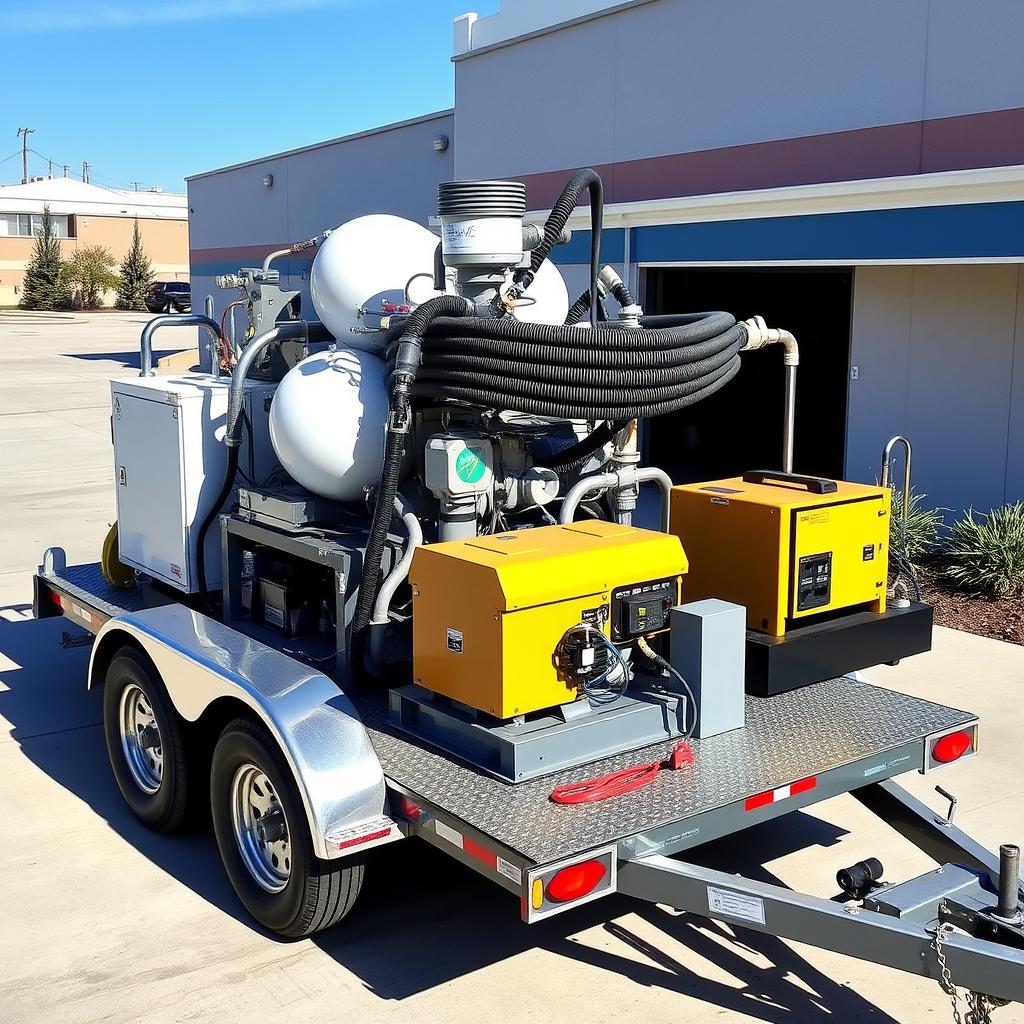
Insulation contractors make significant investments in equipment. A professional spray polyurethane foam rig — proportioner unit, heated hose system, spray gun, and generator — can represent $40,000 to $80,000 in equipment value. Blowing machines for blown-in insulation run $3,000–$15,000. Add trucks, trailers, hand tools, and support equipment, and a typical insulation contractor might have $50,000 to $150,000 in equipment that's exposed to theft, vandalism, and physical damage every working day.
Your general liability policy doesn't cover any of it.
What GL doesn't cover
It's worth being explicit: commercial general liability insurance covers third-party bodily injury and property damage. It doesn't cover damage to your own property or equipment. If your spray rig is stolen from a job site, your GL policy won't pay a dime toward replacing it.
This is a gap many insulation contractors don't discover until they file a claim — and are denied.
Equipment coverage requires separate, dedicated policies.
Tools & equipment coverage: the basics
Tools and equipment (T&E) insurance — sometimes called contractor's equipment coverage — covers your business equipment against:
- Theft: Equipment stolen from a job site, your yard, or your truck
- Vandalism: Deliberate damage to equipment
- Physical damage: Accidental damage from drops, impacts, and other physical events
- Fire and weather: Fire, flooding, wind, and other weather events that damage equipment
What's typically covered:
- Spray proportioner units and reactor units
- Hose reels and fluid delivery hoses
- Spray guns and applicator equipment
- Generators (both portable and trailer-mounted)
- Blowing machines for blown-in insulation
- Hand tools: scrapers, cutting tools, measuring equipment
- Protective equipment used for work purposes
What T&E typically does NOT cover:
- Equipment in transit between job sites (that's inland marine — covered below)
- Mechanical or electrical breakdown (requires equipment breakdown coverage)
- Normal wear and tear
- Equipment that breaks due to operator error in some policies — check the terms
Spray rig valuation: agreed value vs. actual cash value
One of the most important decisions in T&E coverage is whether you insure on an agreed value or actual cash value (ACV) basis.
Actual cash value pays the depreciated value of the equipment at the time of loss. If you paid $50,000 for a spray rig three years ago and it depreciates 20% per year, the ACV might be $20,000 — not enough to replace the rig.
Replacement cost coverage pays the cost to replace the equipment with a new equivalent at today's prices, without depreciation. This is the more protective option for major equipment items like spray rigs.
For expensive insulation equipment, replacement cost coverage is worth the added premium. The difference in cost is typically modest; the difference in a claim payment can be significant.
Inland marine: equipment in transit
Standard T&E coverage applies to equipment at your premises, at a job site, or in storage. It typically does not cover equipment while it's being transported between locations.
If your spray rig trailer is in transit — on a truck, on a flatbed, or being towed — and it's damaged in an accident or stolen during transit, you need inland marine coverage.
Inland marine insurance (a somewhat archaic name for equipment-in-transit coverage) covers:
- Equipment loaded on your truck or trailer
- Equipment being transported by a hired carrier
- Equipment at locations not specifically scheduled on a standard T&E policy
For insulation contractors who regularly move spray rigs, blowing machines, and generators between job sites, inland marine fills the gap that T&E leaves when equipment is on the road.
Equipment breakdown coverage
Neither T&E nor inland marine covers mechanical breakdown — the proportioner that fails because the heaters burned out, the blowing machine that seized because of a motor failure, or the generator that dies because of an electrical fault.
Equipment breakdown coverage (also called boiler and machinery or EBM coverage) covers:
- Mechanical breakdown of equipment
- Electrical failure
- The cost of expediting repairs when equipment failure costs you a job
- Business income loss during the repair period in some policies
For a spray foam contractor, a proportioner breakdown can mean days or weeks of lost revenue while the unit is repaired or replaced. Equipment breakdown coverage, while optional, is worth considering for major equipment items.
Scheduling equipment correctly
T&E and inland marine policies require you to schedule your equipment — provide a list of items with values. The accuracy of this schedule affects your coverage:
- Equipment not scheduled may not be covered, or may only be covered up to a low blanket limit
- Undervalued equipment will be underinsured — if a spray rig is scheduled at $30,000 but would cost $60,000 to replace, you'll collect only what's scheduled
- Newly acquired equipment may need to be added to the schedule promptly after purchase
Maintain an up-to-date equipment inventory with purchase prices, serial numbers, and current replacement values. This makes both accurate scheduling and claims documentation much easier.
Putting the program together
A complete equipment protection program for an insulation contractor typically includes:
- Tools & equipment — core coverage for equipment at premises, storage, and job sites
- Inland marine — covers equipment in transit
- Equipment breakdown — covers mechanical and electrical failure (optional but valuable for major spray rigs)
Some commercial property policies include T&E as a scheduled item; others require separate policies. We'll structure the program to make sure your spray rigs, blowing machines, and support equipment are covered wherever they are and whatever happens to them.
Call 844-967-5247 or use our quote form to get equipment coverage in place quickly.
Need this coverage for your insulation business?
Get a real quote in about 15 minutes — we shop specialist insulation contractor markets.