Spray Foam Liability Insurance: What SPF Contractors Need to Know
By Contractors Choice Agency
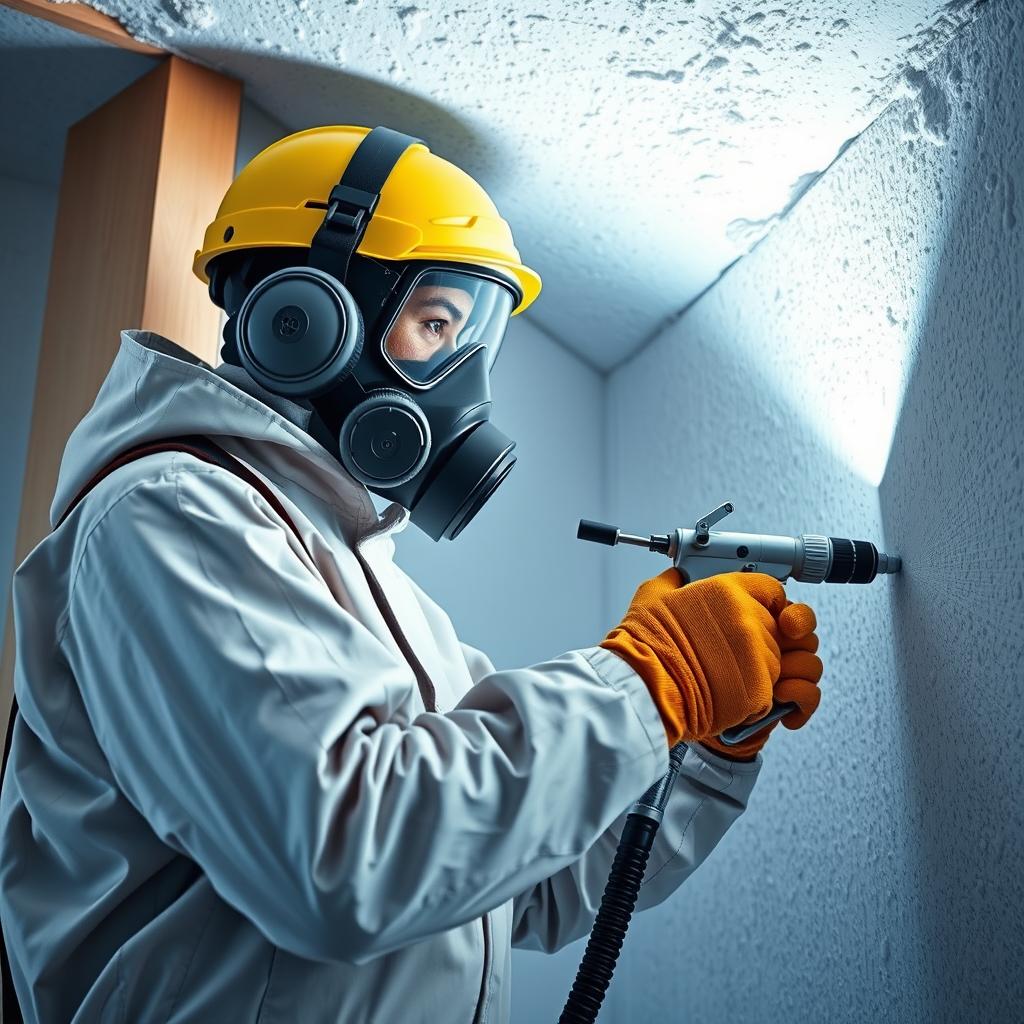
Spray polyurethane foam (SPF) installation is one of the fastest-growing segments of the insulation market — and one of the hardest to insure properly. Most insulation contractors carry a standard commercial general liability (GL) policy and assume they're covered. Often they're not.
The problem is the pollution exclusion.
The pollution exclusion and why it hits spray foam contractors
The standard ISO CGL form contains a pollution exclusion that removes coverage for bodily injury or property damage "arising out of the actual, alleged or threatened discharge, dispersal, seepage, migration, release or escape of pollutants."
The definition of "pollutants" in a standard GL policy is broad: "any solid, liquid, gaseous or thermal irritant or contaminant."
Spray foam chemicals — particularly isocyanates (the A-side of a two-component SPF system) — are known respiratory sensitizers and irritants. Carriers and courts have found that isocyanates and foam off-gassing chemicals can qualify as "pollutants" under the standard policy definition.
The practical result: when a homeowner calls complaining of respiratory symptoms after your crew installed spray foam, the GL carrier may deny the claim under the pollution exclusion.
What spray foam liability insurance covers
Spray foam liability insurance (also written as contractor pollution liability or CPL) is specifically designed to cover the exposures that fall outside standard GL:
During-installation coverage:
- Bodily injury to homeowners or occupants from SPF chemical exposure during or immediately after installation
- Property damage from chemical contamination of HVAC systems, contents, or surfaces
- Third-party medical expenses
Completed operations:
- Off-gassing claims that arise days, weeks, or months after installation
- Adhesion failure claims — foam that failed to bond, delaminated, or contributed to moisture problems
- Property damage discovered after the job is completed
Defense costs:
- Legal defense costs for covered claims, including attorney fees and expert costs — which can be substantial in spray foam litigation
Open-cell vs. closed-cell: does it matter for coverage?
Both open-cell and closed-cell SPF involve isocyanate chemistry. The risk profile differs somewhat:
Open-cell foam (0.5 lb/ft³ density, water-blown) has lower chemical concentrations and is vapor-permeable. Off-gassing concerns are generally lower, but the lower density means less R-value and potential moisture management issues.
Closed-cell foam (2 lb/ft³, HFO or HFC-blown) is denser, higher R-value, and involves hydrofluorocarbon blowing agents in some formulations. Off-gassing from blowing agents can be a concern in confined spaces.
Most spray foam liability policies write both — but underwriters will ask which SPF types you install, and if you work exclusively with one type, your risk profile and pricing will reflect that.
How CPL coordinates with GL
Your GL and spray foam liability (CPL) policies are designed to work together:
- GL responds to non-pollution bodily injury and property damage claims from your work
- CPL responds to claims arising from chemical exposure and off-gassing that the GL pollution exclusion blocks
The key is that the two policies shouldn't have gaps between them. The right program is structured so a claim falls in one policy's coverage territory or the other — not in a gap between both.
One common mistake: buying a CPL policy that requires the GL policy to first deny the claim ("claims-made plus denial trigger"). This can create delays in coverage and disputes between carriers. We structure programs so there's no denial trigger between GL and CPL.
Common spray foam liability claims
Understanding what actually generates claims helps contractors manage risk:
Off-gassing and odor complaints: The most common post-installation complaint. Spray foam releases chemicals during cure, and if a home isn't ventilated properly, occupants may experience headaches, eye irritation, or respiratory symptoms. Even if the SPF was installed correctly, the bodily injury claim follows.
Isocyanate sensitization: Workers and occupants who develop isocyanate sensitization become permanently sensitive to low-level isocyanate exposure. This is a significant long-term liability exposure for SPF installers.
Adhesion failures: SPF that fails to adhere to the substrate — typically when substrate conditions (moisture, temperature, contamination) weren't right — can cause significant property damage as the foam delaminates.
Moisture problems: Incorrect foam selection (using open-cell in below-grade applications, for example) can contribute to moisture accumulation and mold — a potentially costly property damage claim.
Getting spray foam liability coverage
Not every insurance agency has access to markets that write SPF liability. This is a specialty class of business, and many standard admitted markets don't write it or have significant exclusions for spray foam operations.
Contractors Choice Agency places spray foam liability programs for SPF installers across the country. We work with both admitted and E&S markets that specifically underwrite insulation contractor risk.
Call 844-967-5247 for a 15-minute quote on spray foam liability coverage.
Need this coverage for your insulation business?
Get a real quote in about 15 minutes — we shop specialist insulation contractor markets.